
You've just had a great day on the slopes, but now your knee is hurting? This situation is more common than you might think. Knee pain after skiing is often the result of muscle overload, a poor technique, or equipment that doesn't fit perfectly.
If you notice rapid swelling or a feeling that your knee is “giving way,” it could be a ligament injury, such as an ACL or MCL tear. In most cases, a combination of rest, ice, and high-quality medical compression will allow you to resume your activities quickly.
At Bauerfeind Sports Canada, we understand how difficult it is to put your season on hold because of pain. That's why we've developed a complete line of supports specifically designed for skiing and snowboarding to help you understand what's happening in your knee and how to address it.
Identifying your knee pain: where does it hurt?
The location of your pain tells us a lot about what might be causing it. Take a moment to identify exactly where you feel the discomfort.
Pain on the inside of the Knee (MCL Strain)

If your pain is located on the inner side of your knee, you may have strained your medial collateral ligament (MCL). This ligament stabilizes the inner side of your joint. Sharp turns and sideways falls while skiing put a lot of strain on this structure. You may experience tenderness to touch and stiffness that gradually sets in after your day of skiing.
Pain behind the Kneecap (Patellofemoral Syndrome)

Pain behind or around the kneecap often indicates patellofemoral syndrome. This condition occurs when your kneecap does not slide properly in its groove during repeated bending movements. Squatting and jumping put significant pressure on this area. You may notice that the pain increases when you go down stairs or sit for long periods of time.
Sharp pain and swelling (Potential Ligament Tear)

Rapid swelling accompanied by sharp pain warrants immediate attention. If your knee feels unstable or you are unable to bear weight normally, consult a healthcare professional. These signs may indicate a tear in the anterior cruciate ligament (ACL) or other important structures. Do not wait if these symptoms appear.
Common causes of post-skiing knee pain
Skiing puts a lot of strain on your knees. Understanding why knee pain occurs after a day of skiing can help you prevent it.
Statistics confirm this reality: knee injuries account for between 30% and 40% of all skiing-related injuries. In Canada, data from the Canadian Hospital Injury Reporting and Prevention Program (CHIRPP) show that lower limb fractures account for nearly 40% of skiing-related fractures, making the knee a major concern for all skiers.
- Muscle fatigue tops the list. Your quadriceps and hamstrings are constantly working to absorb impact and control your movements. When these muscles tire, your ligaments and joints have to compensate, creating overload.
- Skiing technique also plays an important role. Standing too far back on your skis puts your knees at an angle that increases the strain on your ligaments. Skiers who keep their legs too stiff are poor at absorbing shocks, which has a direct impact on their knees. Research on alpine injuries identifies several particularly dangerous twisting mechanisms: valgus movement with external rotation (the knee turning inward during a turn), the “phantom foot” phenomenon (when the back of the ski catches on the snow during a backward fall), hyperextension of the knee, and poorly controlled jump landings. The majority of these injuries affect the knee ligaments, particularly the medial collateral ligament (MCL) and the anterior cruciate ligament (ACL).
- The wrong equipment can turn a good day into a nightmare. Ill-fitting boots change your natural biomechanics. Bindings that are too tight or too loose increase the risk of injury when falling. Even the length of your skis influences the force applied to your joints with every turn.
- Variable snow conditions require constant adjustments. Icy snow, bumps, and heavy snow put different stresses on your knees. Your body must adapt quickly, which can tire your stabilizing muscles faster than expected.
Immediate relief: the RICE method and the power of compression

As soon as you notice knee pain after skiing, act quickly to limit inflammation and speed up your recovery.
The RICE protocol remains the gold standard for the first 48 hours:
Rest: Give your knee time to heal. This does not mean staying completely immobile, but avoid activities that increase pain. Light movements such as walking on flat ground can even help maintain circulation.
Ice: Apply ice for 15 to 20 minutes, several times a day. Ice reduces swelling and relieves pain. Always protect your skin with a thin cloth to avoid frostbite.
Compression: This is where quality makes all the difference. A well-designed medical compression garment controls swelling while allowing your joint to move naturally. Unlike ordinary elastic bandages that can slip or create pressure points, a technical orthotic maintains uniform compression exactly where you need it.
Elevation: Elevate your leg above the level of your heart when resting. Gravity helps reduce fluid buildup in your knee.
Medical compression goes beyond temporary relief. It improves proprioception, your body's ability to sense where your knee is in space. Better proprioception means more stable movements and a reduced risk of worsening your condition.
Why medical-grade compression is essential for Skiers
Not all knee supports are created equal. Cheap sleeves found in sporting goods stores may look similar, but they lack the features that really make a difference for skiers.
Graduated compression is at the heart of medical technology. Instead of uniform pressure, Bauerfeind orthoses apply compression that gradually decreases from the bottom to the top of your knee. This design promotes venous return and reduces the accumulation of inflammatory fluid. Your tissues receive more oxygen, which speeds up healing.
Unrestricted stability seems contradictory, but that's exactly what our supports achieve. While you ski, your knee must be able to bend completely while remaining stable laterally. Our 3D Airknit technology adapts to every movement like a second skin, without creating creases or friction points under your ski pants.
Durability in extreme conditions is extremely important. Cold, moisture, and constant friction would damage lower-quality products. Bauerfeind's high-performance fibers withstand these conditions while maintaining their elasticity and compression power, season after season.
Bauerfeind Sports Knee Support vs. Standard Sleeves
Here's what really sets our products apart:
Anatomical 3D knitting creates a shape that perfectly fits the contours of your knee. Standard sleeves are cylindrical tubes that slip and wrinkle. Our supports stay in place even in the most demanding skiing positions.
Targeted compression zones place pressure exactly where your knee needs it. Around the kneecap, our supports create a gentle massage that improves circulation. On the sides, compression stabilizes without limiting your flexion.
Technical breathability wicks away sweat quickly. Even on a long day on the slopes, you stay dry. Moisture trapped against your skin creates cold and discomfort. Our Airknit fabric solves this problem.
Clinical tests validate the effectiveness of our products. Studies show that athletes wearing Bauerfeind supports reduce their risk of injury and recover more quickly after exercise. A 2024 clinical study on the GenuTrain orthosis demonstrated a significant reduction in pain and an increase in physical activity after six weeks of wear in active patients. These results are no coincidence, but the outcome of rigorous medical engineering developed in Germany according to the highest medical compression standards.
How to choose the right Bauerfeind support for your skiing style
Each type of knee pain deserves a tailored solution. Here's how to find the right support for your situation from our collection of ski and snowboard knee braces.
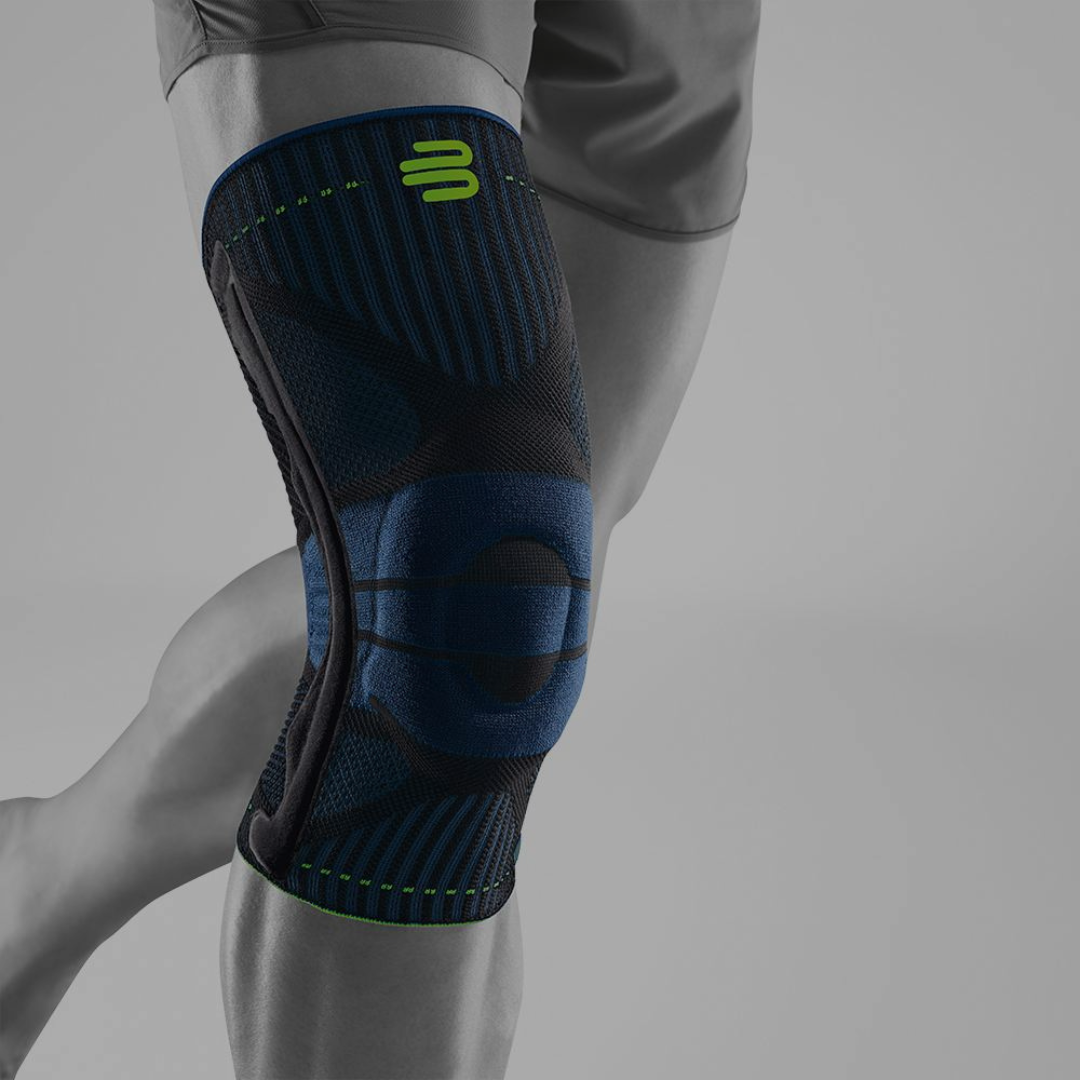
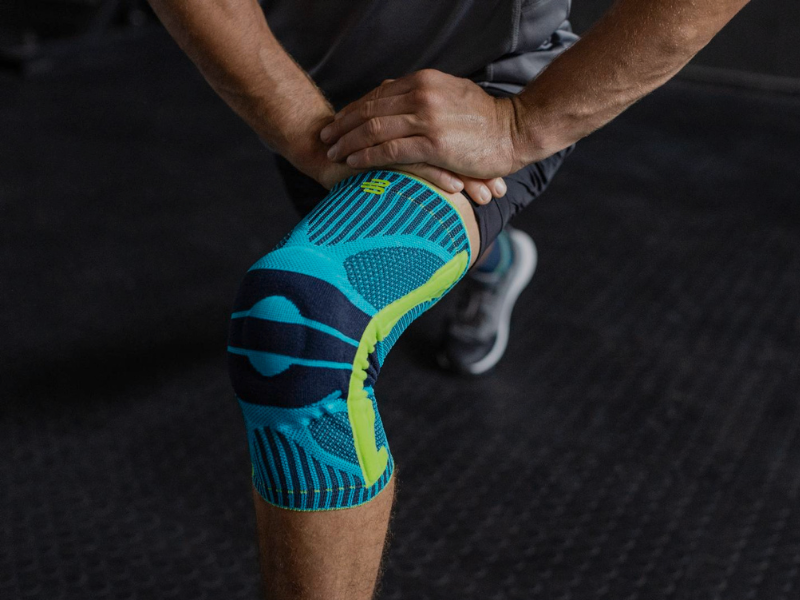
For fatigue and mild pain: The Sports Knee Support is your best choice if you experience general muscle fatigue or sensitivity after several hours of skiing. Its distinctive feature is its Omega Pad, a viscoelastic cushion that surrounds your kneecap and creates a gentle massage during your movements. This pad improves kneecap positioning and reduces painful pressure, which is particularly useful if you suffer from patellofemoral syndrome. The graduated compression supports your muscles and improves your proprioception, while its lightness makes you almost forget you're wearing it. Many skiers wear it preventively in the morning to maintain their performance throughout the day. Its anatomical design stays in place even in the most demanding skiing positions.
For light compression and maximum comfort: The Sports Compression Knee Sleeve provides gentle support that's ideal if you're simply looking to improve circulation and reduce muscle fatigue. Its minimalist design slips easily under your ski pants without adding bulk. The even compression stimulates proprioception and keeps your muscles warm throughout your day on the slopes. It's a great option for skiers who want discreet but effective support.
For targeted patellar pain: The Sports Knee Strap focuses specifically on the area below the kneecap. If you suffer from patellar tendon pain (patellar tendinitis) or patellofemoral syndrome, this strap applies targeted pressure that relieves tension on the tendon. Its compact design allows it to be worn alone or in combination with another support for maximum protection. Skiers appreciate how easy it is to adjust, even with gloves on.
The following table summarizes the recommendations:
|
Symptom |
Recommended Product |
Main Benefit |
| Muscle fatigue/general pain | Sports Knee Support | Omega Pad for the kneecap & full graduated compression |
| Need for light compression | Sports Compression Knee | Maximum comfort & circulation stimulation |
| Patellar pain/ Tendinitis | Sports Knee Strap | Targeted pressure on the patellar tendon |
Exercises to strengthen your knees post-skiing

Active recovery speeds up your healing and gets your knees ready for your next outing. These exercises target the stabilizing muscles that protect your joint.
Assisted squats: Stand near a wall or chair back for balance. Slowly lower yourself until your thighs are parallel to the floor, then rise back up, controlling the movement. Keep your knees aligned with your toes, they should not fall inward. Start with 2 sets of 10 repetitions. If you feel pain, reduce the range of motion.
Side lunges: Standing, take a large step to the side and transfer your weight to that leg by bending your knee. The other leg remains straight. Push back to the starting position. This exercise strengthens the muscles that stabilize your knees during turns while skiing. Do 10 repetitions on each side.
Single-leg bridges: Lie on your back, bend your knees, and place your feet flat on the floor. Lift one leg off the floor and raise your hips by pushing down on the other foot. Hold for 3 seconds at the top, then slowly lower back down. Your glutes and hamstrings work together to stabilize your pelvis and knees. Do 8 to 10 repetitions per leg.
Quadriceps and hamstring stretches: Flexible muscles move better and are less prone to injury. Hold your ankle behind you to stretch the front of your thigh. For your hamstrings, sit with one leg stretched out in front of you and gently lean forward. Hold each stretch for 30 seconds without bouncing.
Balance exercises: Stand on one leg for 30 seconds. When this becomes easy, close your eyes or stand on an unstable surface such as a cushion. These exercises improve your proprioception.
Wear your Bauerfeind support during these exercises. Compression improves your body awareness and helps you perform the movements with better technique. Start slowly and increase the intensity gradually. If an exercise causes sharp pain, stop and consult a professional.
Prevention tips for the rest of your ski season
Once you have managed your knee pain, the goal becomes preventing it from returning.
Warming up before skiing prepares your muscles and joints. Spend 5 to 10 minutes doing dynamic movements in the parking lot or at the base of the lifts. Hip rotations, knee bends, and a few light squats increase your body temperature and circulation. Your muscles respond better when they are warm.
Gradual progression protects your knees from overload. Start your day on easy slopes to allow your body to adapt. Increase the difficulty gradually instead of starting directly on the most demanding slopes. When you feel fatigue setting in, take a break or end your day. Injuries often occur at the end of the day when your muscles are exhausted.
Effective skiing technique reduces stress on your joints. Keep your weight centered on your skis and bend your ankles as well as your knees. A balanced athletic stance absorbs shock better than a stiff, backward stance. If you haven't taken lessons in a while, a few hours with an instructor can correct habits that unnecessarily strain your knees.
Maintaining your equipment matters more than you think. Have your bindings checked by a certified technician every season. Properly adjusted bindings release at the right time to protect your knees during falls. Make sure your boots provide good support without creating pressure points. Sharp edges give you more control, reducing muscle compensation.
Wearing a support as a preventive measure is a smart strategy, especially if you've had knee problems in the past. The Sports Knee Support slips easily under your ski pants and improves your stability without limiting your movement. Many skiers wear it systematically after their first episode of knee pain. Better safe than sorry.
Hydration and nutrition also influence your recovery. Drink regularly even if you don't feel thirsty in the cold. Proper hydration maintains the elasticity of your tissues and helps remove metabolic waste from your muscles. A balanced meal after skiing provides the nutrients needed to repair micro-damage to tissues.
Don't let pain interrupt your season
Your knee pain shouldn't stop you from enjoying the slopes you love. With a clear understanding of what's causing your pain and the right tools to manage it, you can get back to your activities with confidence.
Bauerfeind supports don't just mask the pain : they create the optimal conditions for your knee to heal while you keep moving. The graduated medical compression, anatomical stability, and proven quality of our products make the difference between enduring your season and truly enjoying it.
Thousands of skiers across Canada trust Bauerfeind technology to protect their knees. Whether you're coming back from an injury or looking to prevent a future problem, we have the support that fits your needs.
Find the right brace for your pain in our complete collection of knee supports for skiing. Our team is here to help you choose the product that will allow you to ski with confidence all winter long.
Sources
- Rosenbaum Injury Firm. (2023). “2023 Ski Injury Statistics.” Retrieved from https://www.rosenbauminjuryfirm.com/2023-ski-injury-statistics/
- Public Health Agency of Canada. “Winter Sports Injuries: Downhill Skiing.” Canadian Hospital Injury Reporting and Prevention Program (CHIRPP). Retrieved from https://health-infobase.canada.ca/winter-sport-injuries/alpine-skiing.html
- Shimokochi, Y., & Shultz, S. J. (2008). “Mechanisms of noncontact anterior cruciate ligament injury.” Journal of Athletic Training, 43(4), 396-408. PMC4555526. Retrieved from https://pmc.ncbi.nlm.nih.gov/articles/PMC4555526/
- Bottoni, C. R., et al. (2013). “The effect of knee brace and knee sleeve on knee proprioception.” PubMed, 23726648. Retrieved from https://pubmed.ncbi.nlm.nih.gov/23726648/
- Bauerfeind Life. (2024). “Clinical study using the GenuTrain OA knee orthosis.” Retrieved from https://www.bauerfeind-life.com/en/news/clinical-study-using-the-genutrain-oa-knee-orthosis/
FAQ: your questions about knee pain after skiing
Can I ski with a knee brace?
Yes, absolutely. Using a brace from the Sports range stabilizes your joint and prevents excessive movement that could aggravate an existing injury. Contrary to popular belief, a well-designed brace does not limit your performance, it supports it. The Sports Knee Support's anatomical 3D knit allows for full flexion during turns while controlling dangerous lateral rotation. Many skiers wear a brace after a ligament sprain and find that it restores their confidence on challenging slopes.
Should I use ice or heat for knee pain after skiing?
For acute pain accompanied by swelling, ice is your best option for the first 48 hours. Cold reduces inflammation by slowing blood flow to the affected area. Apply it for 15 to 20 minutes several times a day. After this initial period, if your pain is more due to muscle stiffness without visible swelling, heat can help relax the tissues. Listen to your body. If something increases your pain, stop.
How long does knee pain after skiing typically last?
The duration depends on the cause. Simple muscle fatigue usually improves within 2 to 3 days with rest and appropriate compression. Mild patellofemoral syndrome may require 1 to 2 weeks of active recovery. A moderate ligament sprain sometimes takes 4 to 6 weeks before a full return to skiing. If your pain persists beyond a few days without improvement, consult a professional for an accurate diagnosis.
How do I prevent knee pain when skiing?
Physical preparation makes all the difference. Start a strengthening program 6 to 8 weeks before your ski season. Squats, lunges, and balance exercises prepare your stabilizing muscles. Wearing a Sports Knee Support or Sports Compression Knee Sleeve as a preventive measure improves your proprioception and reduces muscle fatigue during your days on the slopes. Always warm up before you start and listen to your body. Excessive fatigue increases the risk of injury.
Should I see a doctor for my knee pain?
Seek immediate medical attention if you notice rapid swelling within an hour of a fall, if your knee feels unstable, or if you can no longer put weight on it. Severe pain that wakes you up at night or is accompanied by redness and heat also warrants medical evaluation. For moderate pain that improves with rest, try the RICE protocol for a few days. If there is no improvement after a week, a consultation will help identify the specific problem.