
Compression socks for volleyball
3 products


Mid-cut performance running socks with targeted compression – breathable support, anatomical cushioning and a secure fit for every run


Performance running socks with targeted compression – lightweight, breathable and engineered for comfort, stability and endurance

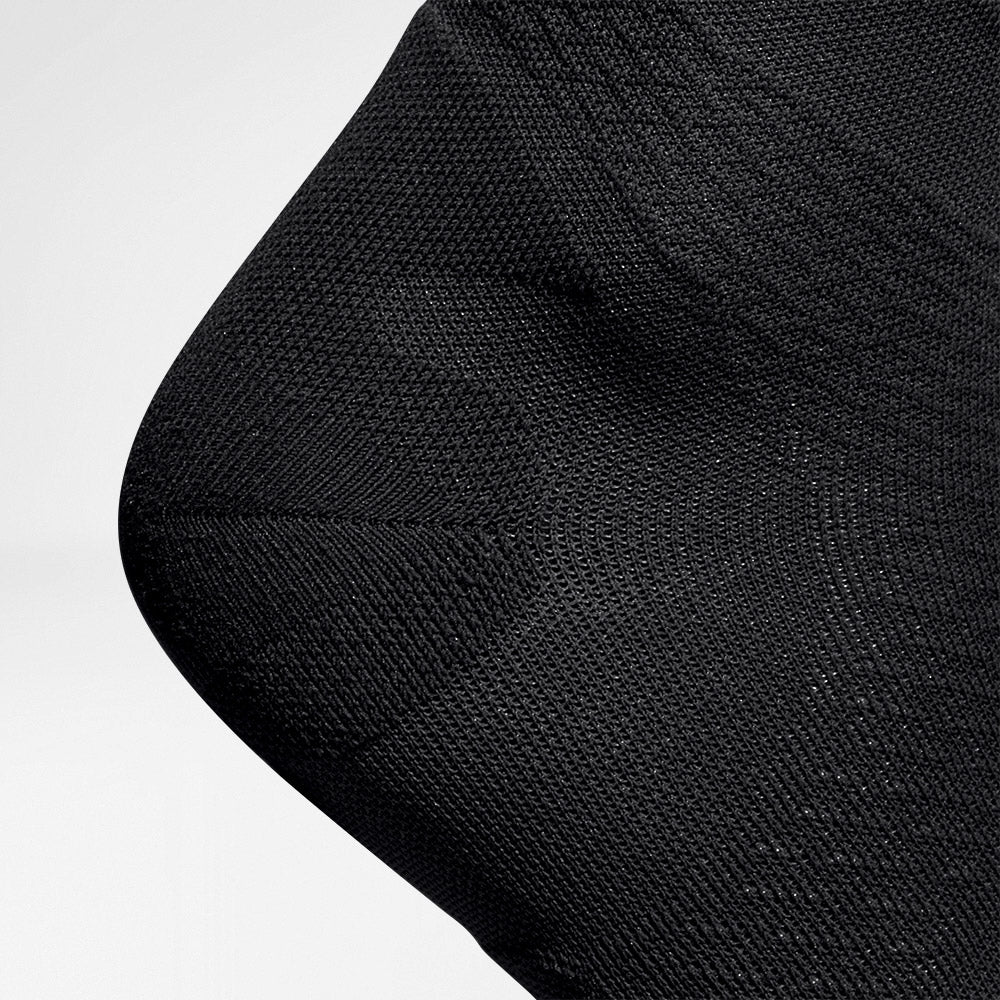
Featherlight performance compression socks with targeted support – ultra-breathable knit, muscle-specific compression and all-day running comfort.
Volleyball asks a lot of your legs: explosive jumps, hard landings and quick changes of direction, match after match. Our compression socks pair German engineering with functional compression zones, and they sit well alongside the rest of our volleyball gear. Try a pair with free 30-day returns and find the cut that feels right on court.
Why volleyball players wear compression socks
Volleyball players wear compression socks to support their lower legs through repeated jumps, landings and sprints, and to feel fresher between sets and matches. The sport is built on short, explosive efforts on hard indoor floors, so the calves and feet take a lot of load. Compression gives those muscles steady support while you play and as you recover.
The research is encouraging. A 2025 systematic review in Life found that compression garments helped limit the loss of muscle strength and power after fatiguing exercise, even though earlier results on strength recovery had been inconclusive.
Compression socks vs calf sleeves: Which one for your game?
Choose compression socks if you want support from the foot to the calf in one piece, and calf sleeves if you would rather keep your own court socks. Socks cover the arch, heel and ankle, while sleeves work on the calf alone.
| Compression socks | Calf sleeves | |
|---|---|---|
| Coverage | Foot, ankle and calf (knee-high), or foot and ankle (mid cut) | Calf only |
| Arch and ankle support | Built into the sock | None, you rely on your own socks |
| Worn with | Replaces your regular socks | Worn with your regular socks |
| Best when | You want one pair of gear from the foot up | You want calf compression and love your current socks |
If you already have a favourite pair of court socks, take a look at our compression sleeves for volleyball. If you want the arch, ankle and calf looked after together, socks are the simpler choice.
How much compression do you need?
You need compression that feels firm and supportive without pinching, and that stays comfortable through a full match. Compression is measured in millimetres of mercury (mmHg), and in graduated compression the pressure is highest at the ankle and decreases up the leg.
Rather than chasing a number, choose by fit and feel. Our Run Ultralight Compression Socks use graduated compression with muscle-specific zones, and the Run Performance Compression Socks use targeted compression for the calf muscles. A sock that is too loose cannot support you and one that is too tight will distract you, so use the size guide on each product page.
Sock height, knee pads and court shoes
Choose a knee-high sock for full calf coverage and a mid-cut sock for ankle and midfoot support without covering the calf. Height decides how the sock sits with your knee pads and court shoes, so pick it first.
A knee-high sock rises up the lower leg and may sit close to the bottom edge of your knee pads, while a mid cut stays well below them. Try your knee pads over the sock at home to check that nothing bunches or pinches. If you want ankle support without calf coverage, the Run Performance Mid Cut Compression Socks are the natural fit, and our wider range of sports compression socks lets you compare more cuts. Pick your cut from the grid above and test it at your next practice.
| Sock | Cut | Compression | Standout features | Choose it if |
|---|---|---|---|---|
| Run Performance Compression Socks | Knee-high | Targeted compression for the calf, plus zones that stabilize the ankle | Ventilation Knit, Arch Support, 3D Power Dots | You want full coverage from foot to calf |
| Run Performance Mid Cut Compression Socks | Mid cut | Compression zones for the midfoot and ankle | Ventilation Knit, Arch Support | You want ankle and midfoot support without calf coverage |
| Run Ultralight Compression Socks | Knee-high | Graduated compression with targeted zones | Ultralight Knit, Infinity Zone, Achilles Comfort, Heel Protection | You want the lightest, most open knit |
Compression socks for tournament days and travel
On tournament weekends, compression socks give your legs steady support through long days of warm-ups, back-to-back matches and travel. One study from the volleyball world looked at travel: in 2019, twelve elite female players flew from Canberra to Manila, six wearing compression socks and six without. The authors concluded that the socks may help athletes cope with the stress of long-haul travel, although the group was small (Broatch et al., 2019).
Pack a fresh pair for each day, and put them on before the first warm-up rather than after your legs feel heavy. For long days in a warm gym, the Run Ultralight Compression Socks use an open, lightweight knit that keeps weight down and air moving.
Our sports compression technologies
Each of our compression socks combines a few technologies that work together: compression where your muscles need it, breathable knit and shaped support. These are the ones you will find across the three socks above.


FAQ
Can I wear compression socks during a match?
Yes, compression socks are made to be worn while you move. Try a new pair at practice first, so you know how the fit feels after an hour of jumping and shuffling. Check that your court shoes still feel comfortable with the extra thickness before match day.
How do I choose my size?
Start with your usual shoe size: our socks come in men’s 6-8, 8.5-10 and 10.5-12, and women’s 4.5-6.5, 7-9 and 9.5-11. For the taller styles, also measure your calf at its widest point and check the size guide on the product page.
How do I care for my compression socks?
Machine wash them cold on a gentle cycle with liquid detergent without additives, and skip bleach and fabric softener. Lay them flat to dry rather than hanging them or using the dryer. Washing them regularly helps them keep their compression and performance.