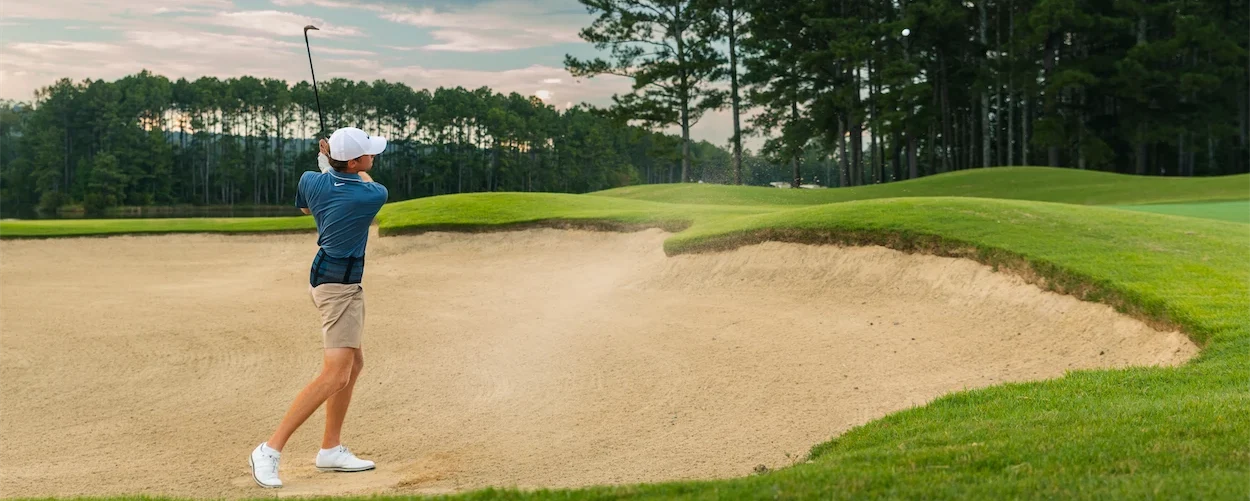
Golf places repeated stress on nearly every major joint in the body, and most golfers will deal with some form of overuse injury during their playing years. This guide covers the six most common golf injuries, golfer's elbow, wrist pain, shoulder pain, lower back pain, knee pain, and ankle pain, why they happen, and the prevention and recovery strategies that keep golfers playing pain-free through every season.
Golf looks effortless on television. But anyone who's played 18 holes knows the reality: a tight lower back, an aching elbow, knees that feel every hill on the walk back to the clubhouse.
Professional golfers manage this by investing in mobility, strength, and recovery long before pain develops. The good news is you don't need to play on the PGA Tour to benefit from the same principles.
Key Takeaways
- Golf injuries are usually caused by repetitive stress rather than sudden impact.
- Efficient movement starts from the ground up through proper foot and body mechanics.
- The lower back, elbows, wrists, shoulders, knees, and ankles are among the most commonly affected areas.
- Strength, mobility, and recovery are the foundation of effective golf injury prevention.
- Small improvements in movement quality often lead to better performance and fewer aches and pains.
- Supporting your joints and muscles can help you stay on the course throughout the season.
Golf Injury Prevention Starts Before Pain Begins
One lesson separates recreational golfers from elite players.
Professional golfers understand that golf injury prevention starts long before pain develops.
They invest in mobility, strength, recovery, and movement quality long before pain develops.
Small habits performed consistently often make the biggest difference over the course of a season.
Whether that's improving hip mobility, strengthening your core, supporting your feet, or recovering properly after a round, prevention is almost always easier than rehabilitation.
Why Golf Injuries Happen, and How to Prevent Them
Understanding why golf injuries occur is the first step toward preventing them.
While every golfer has a unique swing, most injuries develop the same way: repetitive movement places stress on muscles, tendons, and joints until the body can no longer recover fast enough.
The good news is that many of these injuries are preventable through simple golf injury prevention strategies like improving mobility, building strength, and recovering properly.
Let's look at the six areas that most commonly cause golfers problems.
Listen to Your Body Before It Forces You to Stop
One of the biggest mistakes golfers make is assuming that soreness is simply part of the game.
Sometimes that's true.
But persistent discomfort is often your body's way of telling you something isn't moving as efficiently as it should.
Ignoring small aches can eventually lead to:
- Reduced swing speed
- Changes in swing mechanics
- Less consistency
- Longer recovery periods
- More time away from the course
Addressing movement limitations early, through strength training, mobility work, recovery, and proper support, is almost always easier than recovering from a more significant injury later.
The best golfers don't wait until they're injured.
They invest in staying healthy long before pain begins.
Why Golf Is More Physically Demanding Than Most People Think
Many people consider golf a low-impact sport.
While it's true that golf doesn't involve physical contact like hockey or football, the golf swing is one of the most complex athletic movements in sports.
During a full swing, your body rapidly transfers force from the ground through your legs, hips, core, shoulders, arms, and finally into the clubhead.
Professional golfers can generate clubhead speeds exceeding 110 mph (177 km/h), while even recreational golfers repeatedly rotate their spine, load their joints, and place significant stress on muscles and tendons over the course of a round.
Consider what happens during 18 holes:
- Hundreds of practice swings
- Dozens of full-power drives
- Repeated bending to tee the ball or retrieve putts
- Carrying or pushing a golf bag
- Walking six to eight kilometres (4–5 miles)
Multiply those movements over an entire season, and it's easy to understand why overuse injuries are so common.
Unlike traumatic injuries, golf injuries usually develop gradually. They often begin as mild stiffness or soreness before progressing into pain that affects both your game and everyday activities.
Recognizing these warning signs early is one of the most effective golf injury prevention strategies any player can adopt.
Understanding the Golf Swing: Why the Body Works as One System

One of the biggest misconceptions in golf is that pain always starts where it hurts.
In reality, discomfort in one area often begins somewhere else.
Sports medicine professionals refer to this as the kinetic chain: the idea that every part of your body works together to produce an efficient golf swing.
If one link in that chain isn't functioning properly, another area must compensate.
For example:
- Limited ankle mobility can reduce balance during the swing.
- Poor hip rotation may force the lower back to rotate more than it should.
- Weak core muscles can increase stress on the shoulders and elbows.
- Reduced wrist mobility can affect club control and swing consistency.
Rather than viewing injuries as isolated problems, elite golfers focus on improving the entire movement system.
That's why strength training, mobility work, recovery, and proper support have become essential parts of modern golf performance.
Every Great Golf Swing Starts From the Ground Up
Ask a golf coach where power comes from, and they'll rarely point to the arms.
Power begins at your feet.
Your feet provide the stable foundation that allows energy to travel efficiently through your body during every swing. They influence your balance, weight transfer, rotational control, and overall consistency.
When that foundation becomes unstable, other joints (including the ankles, knees, hips, and lower back) often compensate.
Good foot mechanics help golfers:
- Maintain balance throughout the swing
- Transfer weight more efficiently
- Improve rotational stability
- Reduce unnecessary stress on the knees and lower back
- Finish each swing with greater control
This is one reason many serious golfers invest in more than just quality clubs and footwear.
Supportive sports insoles can help promote natural foot mechanics while improving comfort during long rounds on the course.
Bauerfeind Sports Insoles, featuring Weightflex® technology, are designed to support the foot's natural rolling motion while helping distribute pressure more evenly throughout each step and swing.
For golfers who regularly walk 18 holes, that foundation becomes increasingly important as fatigue sets in later in the round.
The Six Most Common Golf Injuries
Although every golfer is different, most injuries tend to affect the same key areas of the body.
We'll take a closer look at each throughout this guide, but here's an overview of the conditions golfers experience most often.
🏌️ Quick Fact
Most golf injuries aren't caused by one bad swing.
They're the result of thousands of repeated swings, combined with walking long distances, limited mobility, muscle fatigue, and insufficient recovery.
The good news?
Many of these injuries can be prevented with better movement habits, strength training, and recovery strategies.
1. Golfer's Elbow
Despite its name, golfer's elbow doesn't only affect golfers.
Repeated gripping and swinging can overload the tendons on the inside of the elbow, leading to pain, tenderness, and reduced grip strength.
2. Wrist Pain
Your wrists absorb significant force during impact with the golf ball, and occasionally the ground.
Poor swing mechanics, repetitive practice, or striking the turf before the ball can place additional stress on the wrist joint.
3. Shoulder Pain
The shoulders generate much of the rotational speed behind every drive, which puts the rotator cuff and surrounding tendons through a demanding range of motion on every swing.
Limited thoracic mobility or a rushed swing tempo can increase strain on the shoulder, particularly on the lead-arm side.
4. Lower Back Pain
Lower back discomfort is one of the most frequently reported complaints among golfers.
Repeated rotation, inadequate core strength, and limited hip mobility can all increase stress on the lumbar spine.
5. Knee Pain
Every golf swing involves weight transfer and rotational movement through the knees.
Over time, repetitive loading may contribute to discomfort, particularly in golfers with previous injuries or arthritis.
6. Ankle Pain
Although less frequently discussed, the ankles play an important role in balance and stability throughout the golf swing.
Poor foot mechanics or limited ankle mobility can influence the entire kinetic chain and contribute to discomfort elsewhere in the body.
Golfer's Elbow: More Than Just an Elbow Problem

Despite its name, golfer's elbow (medial epicondylitis) doesn't only affect professional golfers. It's one of the most common overuse injuries among recreational players and develops when the tendons on the inside of the elbow become irritated through repeated gripping and swinging.
Think about a typical afternoon at the driving range.
You hit one bucket.
Then another.
Before you know it, you've made more than one hundred swings.
Each one asks your elbows, wrists, shoulders, and lower back to repeat the same movement over and over again.
That's why many golf injuries don't appear after one bad swing. They develop gradually over weeks, months, or even years.
Common Symptoms
- Pain on the inside of the elbow
- Tenderness when gripping the club
- Weak grip strength
- Discomfort after long practice sessions
- Pain when lifting everyday objects
Many golfers assume the solution is simply to rest.
While short-term rest can help calm irritation, long-term improvement usually comes from addressing the cause.
How to Reduce Your Risk
Improving forearm strength and flexibility can reduce unnecessary strain on the elbow. It's also worth having your grip size, club fit, and swing mechanics evaluated, as these factors may increase stress on the joint.
Simple habits that help include:
- Warming up before every round
- Stretching the forearm muscles after practice
- Avoiding sudden increases in practice volume
- Building grip and forearm strength gradually
For golfers experiencing recurring discomfort, additional support during play may also help.
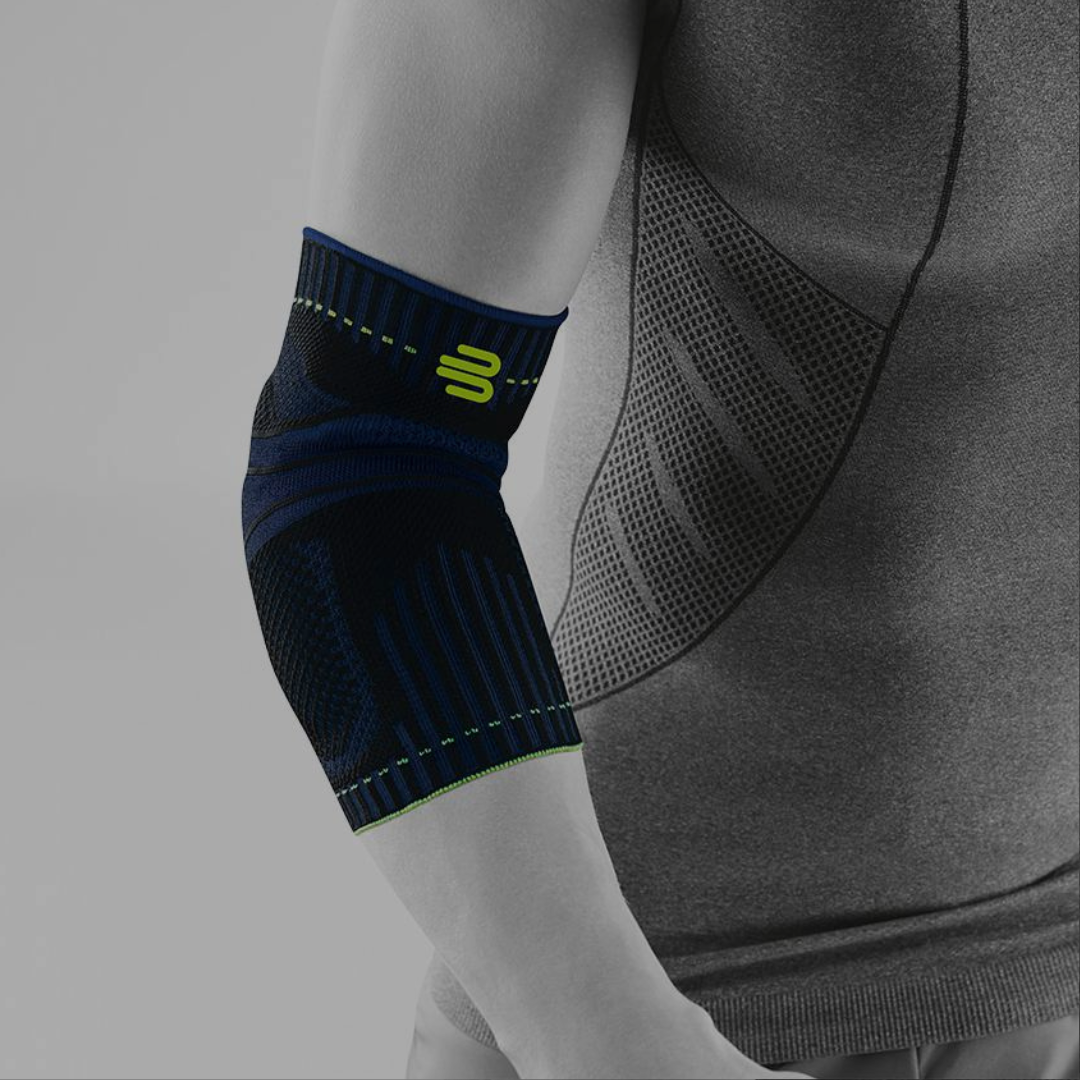
The Bauerfeind Sports Elbow Strap applies targeted pressure to the affected tendon, helping reduce strain while allowing natural movement throughout your swing. Lightweight and low-profile, it can be worn comfortably during practice or a full round without interfering with your grip or swing mechanics. Browse our full range of golf elbow braces and supports to compare options built for the demands of the swing.
Wrist Pain: Small Joint, Big Responsibility

Your wrists may be relatively small, but they absorb enormous forces during every swing.
Whether you're striking the ball cleanly from the fairway or accidentally catching the ground first, impact travels directly through the wrists before moving into the forearms and elbows.
Over time, repetitive stress can lead to irritation, stiffness, or discomfort, particularly in golfers who practice frequently or struggle with swing mechanics.
Common Causes of Wrist Pain
- Hitting the ground before the ball
- Excessive grip pressure
- Poor swing mechanics
- Sudden increases in practice time
- Reduced wrist mobility
Pain often begins gradually and may only appear after a round before becoming noticeable during every swing.
Ignoring these early warning signs can lead to longer recovery times later in the season.
Improving Wrist Health
Healthy wrists depend on more than flexibility alone.
Strengthening the muscles of the hands, forearms, and shoulders helps improve stability while reducing unnecessary stress during impact.
Golfers should also focus on:
- Dynamic wrist mobility before playing
- Light stretching after each round
- Maintaining proper grip pressure
- Allowing adequate recovery between practice sessions
When extra support is needed, the Bauerfeind Sports Wrist Strap is a popular choice among golfers managing recurring wrist strain. Its anatomically contoured design provides targeted compression while helping stabilize the wrist without limiting the natural movement required for a smooth golf swing.
Shoulder Pain: The Engine Behind Every Drive
The shoulders rarely get the same attention as the elbow or lower back, but they generate much of the rotational speed behind every drive. During the backswing and follow-through, the shoulders move through an extreme range of motion while stabilizing the arms and club.
Over time, that repeated rotation, especially when combined with limited thoracic mobility or a rushed swing tempo, can irritate the rotator cuff and the tendons surrounding the joint.
Common Causes of Shoulder Pain
- Limited thoracic (mid-back) rotation
- Overuse from frequent practice or lessons
- Poor swing sequencing, including an "over the top" motion
- Weak rotator cuff and shoulder blade stabilizer muscles
- Skipping a proper warm-up before swinging
Golfers sometimes notice discomfort at the top of the backswing or during the follow-through, particularly on the lead-arm side.
Protecting Your Shoulders
Because the shoulders depend heavily on the mobility of the joints around them, improving thoracic spine rotation is often the first step toward reducing strain. Strengthening the rotator cuff and shoulder blade stabilizers can also help the joint absorb the demands of a full swing.
Helpful habits include:
- Thoracic rotation drills
- Rotator cuff strengthening exercises
- Band pull-aparts and scapular retraction work
- Dynamic shoulder warm-ups before every round
- Increasing practice volume gradually rather than jumping into long sessions
Golfers managing ongoing shoulder discomfort should also have their swing mechanics reviewed, since compensations elsewhere in the kinetic chain, such as limited hip or ankle mobility, often place extra demand on the shoulder. For golfers who want broader upper-body support during recovery, Bauerfeind's full range of sports braces and supports is worth exploring alongside a proper mobility and strengthening routine.
Lower Back Pain: The Most Common Complaint Among Golfers

If there's one injury that affects golfers more than any other, it's lower back pain.
The golf swing combines rotation, side bending, and force production, all movements that place considerable demands on the lumbar spine.
When mobility is limited in the hips or thoracic spine, the lower back often compensates by rotating more than it should.
Over hundreds or even thousands of swings, those repeated movements can contribute to stiffness, muscle fatigue, or persistent discomfort.
Why the Lower Back Works So Hard
Your lower back acts as a bridge between your upper and lower body.
If either side isn't moving efficiently, the spine absorbs additional stress.
Common contributors include:
- Limited hip mobility
- Weak core muscles
- Poor posture
- Reduced glute strength
- Swinging harder than your body can control
For many golfers, improving movement quality, not simply swinging less, is the key to long-term comfort.
Protecting Your Back
Building a resilient golf swing starts away from the course.
Adding just two or three strength sessions each week can improve stability throughout the hips and core while reducing unnecessary stress on the lower back.
Exercises that benefit golfers include:
- Bird dogs
- Dead bugs
- Glute bridges
- Side planks
- Pallof presses
- Hip mobility drills
Just as importantly, avoid heading straight to the first tee without warming up.
Five to ten minutes of dynamic movement before a round can help prepare your body for the rotational demands of the golf swing.
Recovery: The Most Overlooked Part of Golf Performance
Most golfers spend hours practicing their swing.
Very few spend even ten minutes recovering afterward.
Consistent recovery is one of the most overlooked aspects of golf injury prevention. It helps your body adapt before minor aches become long-term problems.
Without enough recovery, fatigue accumulates, movement quality declines, and minor aches can gradually develop into chronic injuries.
Professional golfers understand this.
Following tournaments, recovery often includes mobility work, hydration, nutrition, light movement, and strategies designed to reduce muscular fatigue before the next practice session.
The goal isn't simply to feel better tomorrow.
It's to keep performing well throughout an entire season.
Not All Compression Is Created Equal
Compression has become increasingly popular in sport, but there's an important difference between standard sports compression and medical-grade graduated compression.
Graduated compression is engineered to apply the greatest pressure at the lower part of the limb, gradually decreasing upward. This design helps support circulation and venous return during activity and recovery.
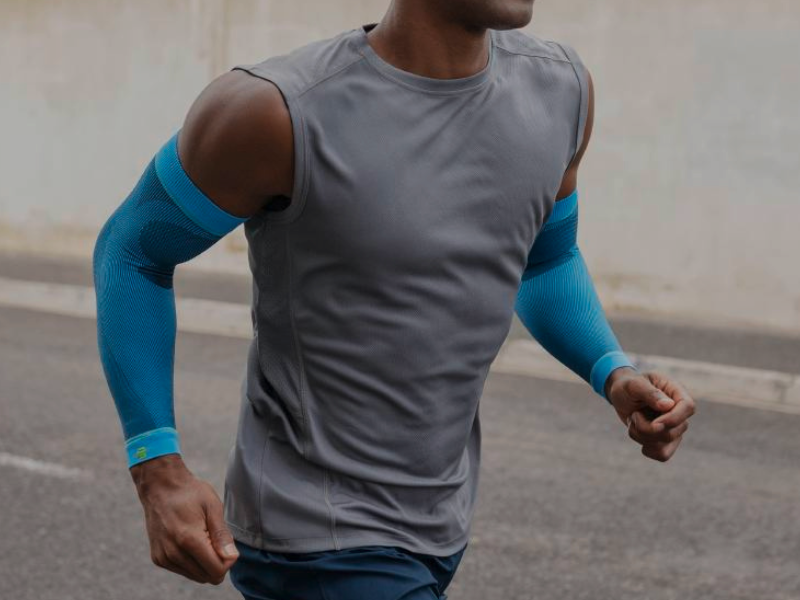
Bauerfeind Sports Compression Sleeves feature 20-30 mmHg medical-grade graduated compression, the same compression class commonly used in clinical rehabilitation settings.
For golfers who regularly walk 18 holes, practice several times each week, or compete in multi-day tournaments, this additional support can become part of a consistent recovery strategy.
- Potential benefits include:
- Support for healthy circulation
- Reduced muscle vibration while walking the course
- Improved body awareness during movement
- Comfortable support throughout long rounds
- Recovery between consecutive days of play
The same principle applies above the wrist. Golfers managing forearm fatigue, sun exposure, or general arm-muscle recovery during long rounds can find a comparable option in Bauerfeind's golf arm sleeve collection, which offers the same 20-30 mmHg graduated compression for the forearm and upper arm.
Compression isn't a replacement for mobility, strength training, or proper recovery, but when combined with those habits, it can help support overall performance and comfort throughout the golf season.
What Elite Golfers Do Differently
Watch any PGA or LPGA tournament and you'll notice something interesting.
The players who remain competitive year after year don't simply practice longer.
They prepare smarter.
Elite golfers understand that every practice session places stress on the body, and that consistent recovery is essential for maintaining performance throughout a demanding season.
Their routines often include:
- Daily mobility work
- Strength training
- Recovery-focused nutrition
- Hydration
- Sleep
- Warm-up routines before every round
- Recovery strategies after every round
The lesson isn't that you need to train like a touring professional.
It's that the habits behind elite performance are available to every golfer.
Building those habits consistently can help you stay healthier, recover more effectively, and continue enjoying the game for years to come.
Protect Your Lower Body: Why Healthy Knees, Ankles, and Feet Matter in Golf

When golfers think about injury prevention, they often focus on the shoulders, elbows, or lower back.
But every golf swing starts from the ground up.
Your feet create the foundation. Your ankles provide balance and stability. Your knees transfer force as your weight shifts throughout the swing.
If one part of that chain isn't moving efficiently, another part has to work harder to compensate.
That's why improving your lower-body mechanics doesn't just reduce discomfort. It can also contribute to a more consistent, powerful, and repeatable golf swing.
Knee Pain: The Hidden Cost of Repetitive Swings
Although golf isn't considered a high-impact sport, the knees experience thousands of rotational loading cycles over the course of a season.
Every swing requires weight transfer from one leg to the other while the knees stabilize your body against powerful rotational forces.
For golfers with previous knee injuries, arthritis, or reduced stability, this repetitive movement can gradually lead to discomfort.
Common Causes of Knee Pain in Golf
- Repetitive rotational stress
- Poor hip mobility
- Weak glutes and leg muscles
- Previous knee injuries
- Walking long courses on uneven terrain
Many golfers notice discomfort after a round rather than during it.
That delayed soreness is often a sign that the joint has been working harder than it should throughout the day.
Supporting Healthy Knees
Keeping your knees healthy begins with improving the joints around them.
Stronger hips and glutes reduce unnecessary stress on the knees while better ankle mobility allows your body to rotate more naturally during the swing.
Exercises such as:
- Step-ups
- Split squats
- Glute bridges
- Single-leg balance drills
- Lateral band walks
can improve lower-body stability while supporting more efficient movement patterns.
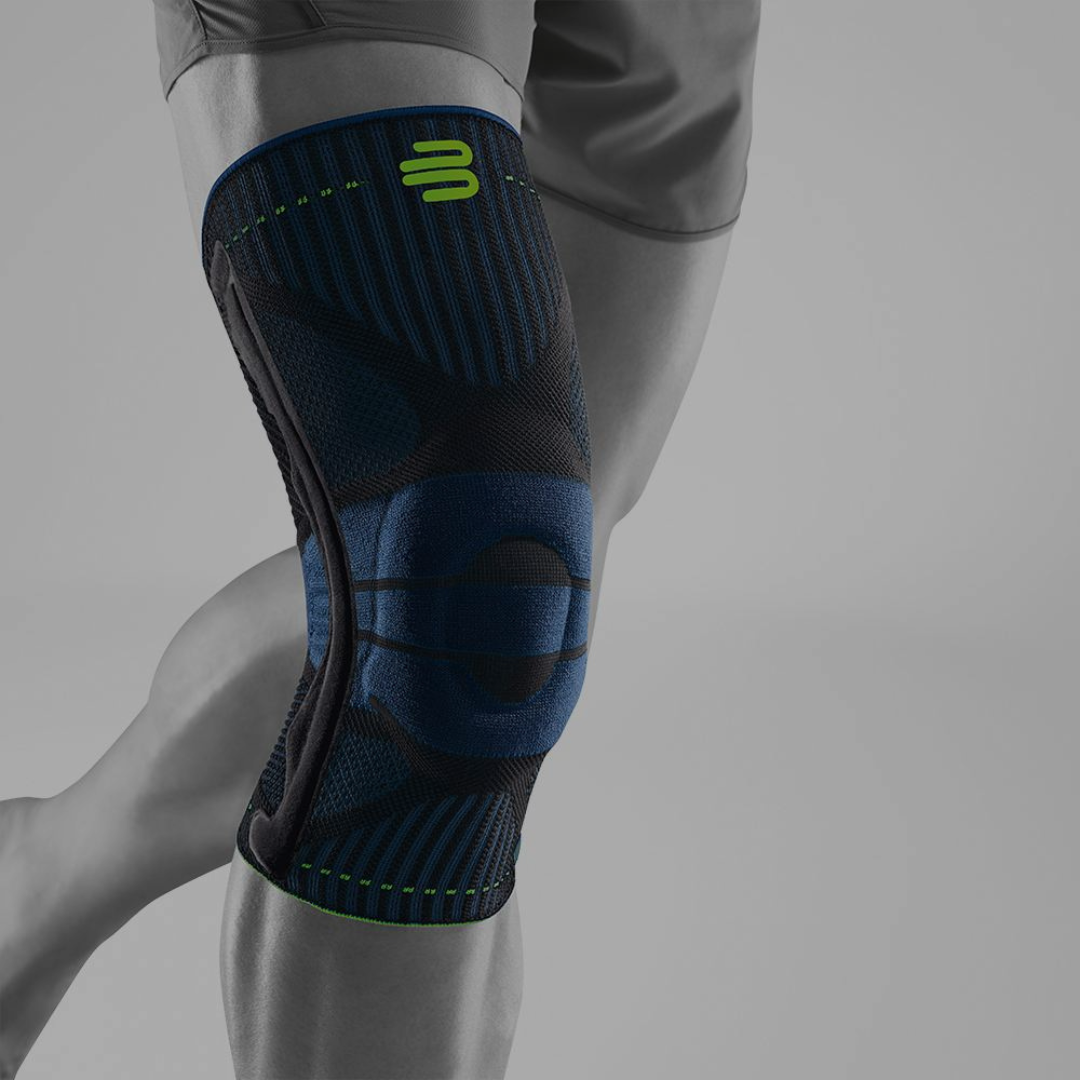
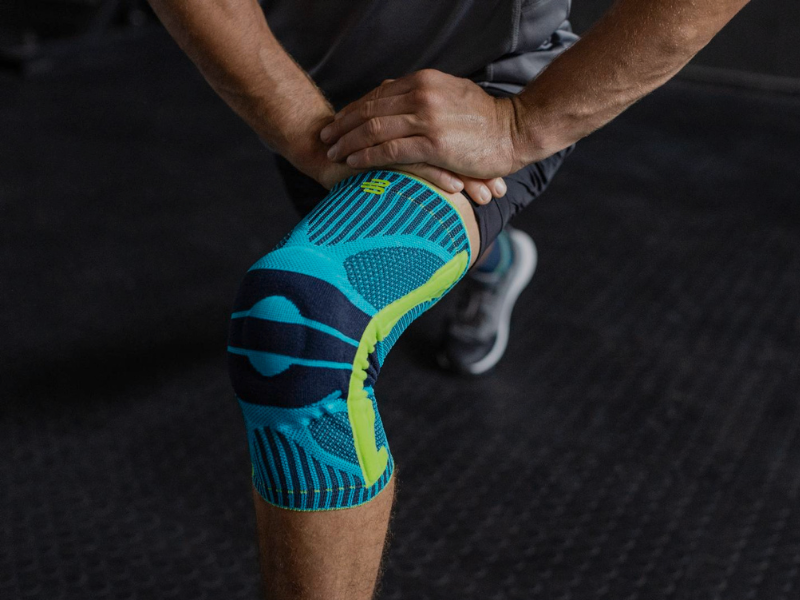
For golfers looking for additional confidence during play, the Bauerfeind Sports Knee Support combines an anatomically contoured knit, targeted compression, and an integrated Omega pad to provide support without compromising the natural movement your golf swing requires. Explore the full golf knee braces and supports collection to find your fit.
Whether you're walking 18 holes or spending hours on the driving range, maintaining knee comfort helps you stay focused on your game, not your joints.
Don't Ignore Your Ankles
Ankle injuries are often associated with sports like basketball or soccer, but healthy ankles are equally important in golf.
Your ankles control balance throughout the swing while helping transfer force from the ground into your body.
Limited ankle mobility can affect:
- Weight transfer
- Swing balance
- Rotational efficiency
- Stability on uneven lies
- Walking comfort during long rounds
If you've ever struggled to maintain balance on a sidehill lie or felt unstable after a swing, your ankles may be contributing more than you realize.
Improve Ankle Stability
Simple exercises performed two or three times each week can make a noticeable difference.
Include:
- Single-leg balance
- Heel raises
- Toe raises
- Resistance band ankle exercises
- Ankle mobility stretches
These movements help improve both stability and confidence on the course.
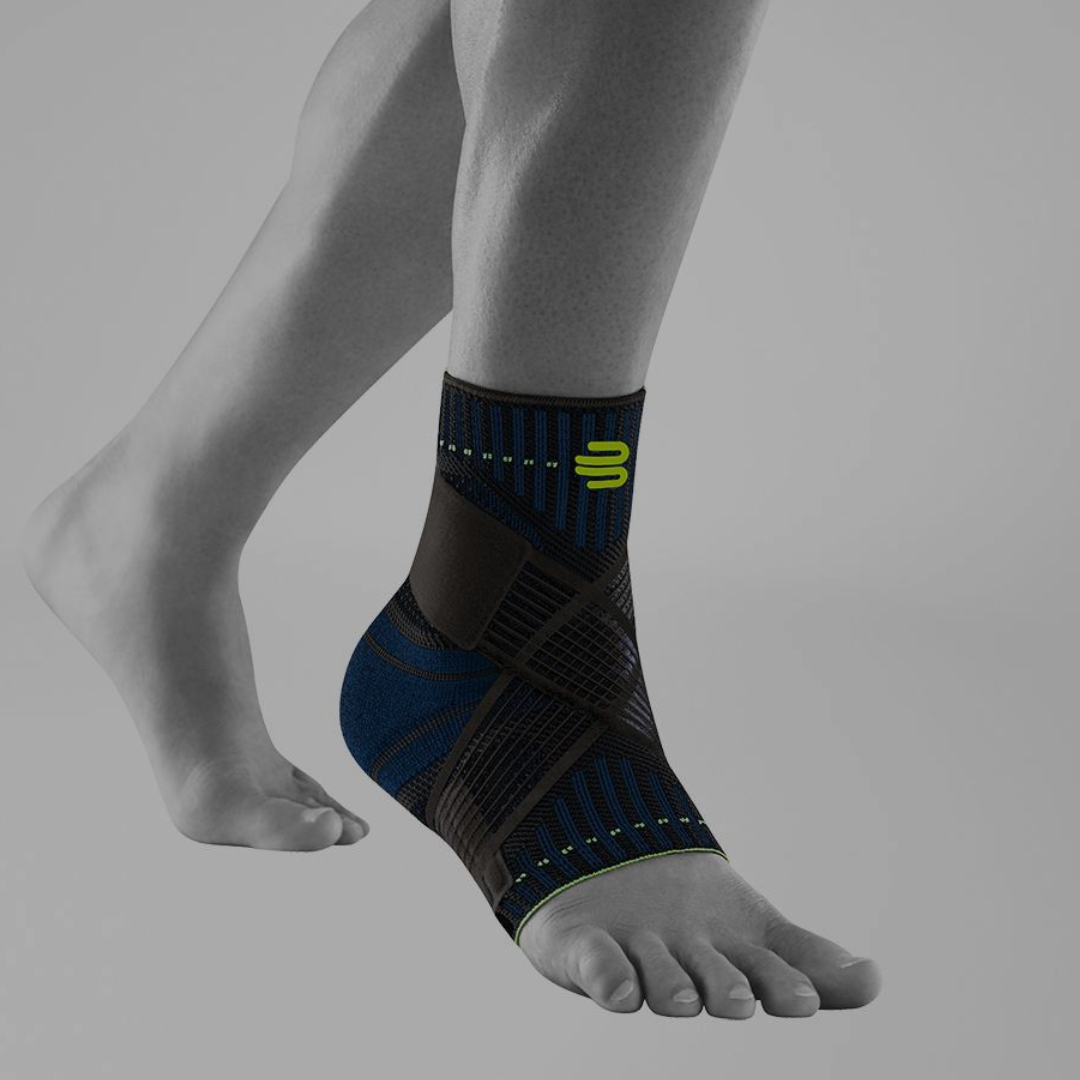
The Bauerfeind Sports Ankle Support Dynamic is built for golfers who want support without bulk. Its targeted compression and figure-eight stabilization strap provide dynamic support while preserving the natural movement required for a smooth, balanced golf swing. See the full golf ankle braces and supports collection to find your fit.
Every Great Swing Starts With Your Feet
Many golfers spend thousands of dollars on clubs, launch monitors, and lessons.
Yet one of the most important pieces of equipment is often overlooked.
Your feet.
Every ounce of force you generate begins where your feet contact the ground.
Poor foot mechanics don't just affect comfort.
They can influence:
- Balance throughout the swing
- Weight transfer
- Clubhead consistency
- Lower-body stability
- Stress on the knees and lower back
As fatigue develops during a round, maintaining a stable foundation becomes even more important.
That's one reason many serious golfers pay close attention to foot support, not only inside their golf shoes but also throughout training and recovery.
Bauerfeind Sports Insoles, featuring Weightflex® technology, are designed to support the foot's natural rolling motion while helping distribute pressure more evenly throughout each step.
For golfers who walk the course regularly, improved comfort underfoot can contribute to a more consistent experience from the first tee to the eighteenth green.
The Perfect Golf Warm-Up (10 Minutes)
One of the simplest golf injury prevention habits is taking ten minutes to properly warm up before every round:
Don't arrive at the first tee and immediately start swinging.
Professional golfers spend time preparing their bodies before every round because they understand that warm muscles move more efficiently than cold ones.
Try this simple warm-up before you play:
1. Brisk Walk (2 minutes)
Increase circulation with a quick walk around the practice area.
2. Hip Rotations (1 minute)
Improve rotational mobility before your first swing.
3. Arm Circles (1 minute)
Loosen the shoulders and upper back.
4. Cat-Cow Stretch (1 minute)
Mobilize the spine and prepare for rotational movement.
5. Bodyweight Squats (1 minute)
Activate the hips and legs.
6. Standing Torso Rotations (2 minutes)
Practice controlled golf-specific rotation.
7. Half-Speed Practice Swings (2 minutes)
Gradually increase swing speed before your first full shot.
Ten minutes of preparation can make a noticeable difference in both comfort and performance throughout your round.
Five Common Mistakes Golfers Make
Even experienced golfers sometimes develop habits that increase injury risk.
Avoid these common mistakes:
1. Practicing Too Much Too Quickly
Suddenly increasing practice volume gives your muscles and tendons little time to adapt.
Build intensity gradually.
2. Skipping Strength Training
Strength isn't just for distance.
It helps stabilize joints and improves movement efficiency throughout the golf swing.
3. Ignoring Mobility
A stiff body forces other joints to compensate.
Regular mobility work helps maintain smooth, efficient movement.
4. Waiting Until You're Injured
Many golfers only think about recovery once pain develops.
The best time to support your body is before discomfort begins.
5. Underestimating Recovery
Recovery isn't something reserved for professional athletes.
Hydration, quality sleep, mobility work, and supporting your muscles and joints after long rounds all contribute to staying healthy throughout the season.
Sample Weekly Golf Performance Plan
Playing better golf isn't about practicing every day.
It's about balancing practice, fitness, and recovery.
| Day | Focus |
| Monday | Mobility + Core Strength |
| Tuesday | Driving Range + Short Game Practice |
| Wednesday | Lower-Body Strength + Balance Training |
| Thursday | Recovery Walk + Stretching |
| Friday | Full Swing Practice + Putting |
| Saturday | 18-Hole Round |
| Sunday | Active Recovery + Mobility |
Notice something?
Recovery appears throughout the week, not just after your round.
That's exactly how elite golfers approach performance.
They don't simply practice more.
They prepare their bodies so they can continue practicing at a high level all season long.
Small Improvements Lead to Better Golf
Many golfers search for one swing change that will transform their game.
The reality is much simpler.
Better golf usually comes from stacking small improvements over time.
A stronger core.
Better hip mobility.
More stable feet.
Healthier knees.
Improved recovery.
Individually, each change may seem small.
Together, they can help you move more efficiently, feel more comfortable, and enjoy every round with greater confidence.
Frequently Asked Questions About Common Golf Injuries
What is the most common golf injury?
One of the most common golf injuries is lower back pain, followed closely by golfer's elbow, wrist pain, shoulder pain, and knee discomfort.
Unlike traumatic sports injuries, golf-related pain usually develops gradually through repetitive movement rather than a single incident. Addressing minor aches early, and improving strength, mobility, and recovery, can help prevent them from becoming long-term problems.
Why do golfers get injured?
Most golf injuries aren't caused by swinging too hard.
They're caused by repeating the same movement thousands of times while the body gradually becomes fatigued or compensates for limited mobility.
Common contributing factors include:
- Poor swing mechanics
- Limited hip or shoulder mobility
- Weak core and lower-body muscles
- Skipping warm-ups
- Practicing too much without adequate recovery
- Previous injuries
Improving movement quality is often just as important as improving your swing.
Can golf cause knee pain?
Yes.
Every golf swing requires your knees to absorb rotational forces while transferring weight from one side of your body to the other.
Walking long courses, uneven terrain, and repetitive practice can also place additional demands on the knee joint.
Strengthening the hips and legs, improving ankle mobility, and maintaining good movement mechanics can all help reduce unnecessary stress on the knees.
Golfers looking for additional confidence during play may also benefit from supportive solutions like the Bauerfeind Sports Knee Support, designed to provide targeted compression and stability without restricting natural movement.
Why does my elbow hurt after golfing?
Pain on the inside of the elbow is often associated with golfer's elbow (medial epicondylitis).
Repeated gripping and swinging can overload the tendons responsible for wrist and finger movement, particularly during long practice sessions.
Improving forearm strength, warming up properly, and gradually increasing practice volume can help reduce strain on the elbow.
For additional support, the Bauerfeind Sports Elbow Strap applies targeted pressure to the affected tendon, helping reduce strain while allowing natural movement throughout your swing. Lightweight and low-profile, it can be worn comfortably during practice or a full round without interfering with your grip or swing mechanics.
Can compression help golfers?
Compression may help support circulation, reduce muscle vibration, and improve body awareness during activity.
Unlike many standard sports sleeves, the Bauerfeind Sports Compression Calf Sleeves feature 20-30 mmHg medical-grade graduated compression designed to support circulation, reduce muscle vibration, and promote comfort during long rounds and recovery.
For golfers who walk 18 holes regularly, compete in tournaments, or play several rounds in a short period, graduated compression can become a valuable part of a well-rounded recovery routine.
What are the best golf injury prevention strategies?
Most golf injuries are preventable.
The key is developing habits that support your body before pain develops.
Focus on:
- Warming up before every round
- Building strength throughout the body
- Improving mobility
- Staying hydrated
- Recovering properly after playing
- Progressing practice volume gradually
- Supporting key joints when needed
Consistency, not perfection, is what keeps golfers healthy throughout the season.
The Elite Golfer's Checklist
Before your next round, ask yourself:
✅ Did I warm up properly?
✅ Am I well hydrated?
✅ Have I been strength training consistently?
✅ Have I worked on my mobility this week?
✅ Are my feet, knees, and ankles supported for 18 holes?
✅ Did I recover well after my last round?
If you answered "no" to several of these questions, you've likely identified opportunities to improve not only your comfort, but your performance as well.
Great Golf Starts Long Before Your First Tee Shot
It's easy to believe that playing better golf is all about swing mechanics.
While technique certainly matters, it's only one piece of the puzzle.
Every smooth swing depends on a body that's prepared to move efficiently.
Healthy feet create balance.
Stable ankles improve control.
Strong knees transfer power.
A mobile spine generates rotation.
Healthy elbows and wrists deliver the club consistently through impact.
When every part of the body works together, the golf swing feels effortless.
When one link in the chain begins to struggle, your body compensates, and that's often where discomfort begins.
The best golfers understand this.
They don't simply chase a better swing.
They build healthier movement.
They prioritize recovery.
They prepare before every round.
And they make small improvements consistently over time.
Whether you're working toward a lower handicap, playing your local course every weekend, or simply enjoying time outdoors with friends, taking care of your body is one of the smartest golf injury prevention investments you can make.
Because the goal isn't just to play better golf today.
It's to keep playing the game you love for years to come.
Support Every Round with Bauerfeind Sports
At Bauerfeind Sports, we believe your equipment should support more than just your scorecard.
Explore our golf essentials collection to find the elbow, wrist, shoulder, knee, and ankle support built for the demands of the game.
Whether you're preparing for your weekly foursome, competing in your club championship, or simply enjoying a relaxing afternoon on the course, investing in your movement today can help you continue playing the game you love tomorrow.
At Bauerfeind Sports, we believe better golf starts with a healthier body.
Our sports supports, medical-grade compression products, and performance insoles are designed to help you move confidently, recover effectively, and stay comfortable through every round.
Train smarter.
Recover intentionally.
Move confidently.
Enjoy every round.
References
- American College of Sports Medicine (ACSM). Exercise and Physical Activity Guidelines.
- Titleist Performance Institute (TPI). Golf Fitness and the Body-Swing Connection.
- Journal of Orthopaedic & Sports Physical Therapy. Common Musculoskeletal Injuries in Golfers.
- Journal of Strength and Conditioning Research. The Effects of Strength Training and Recovery Strategies on Golf Performance.
- Bauerfeind AG. Medical-grade compression and sports support technology.